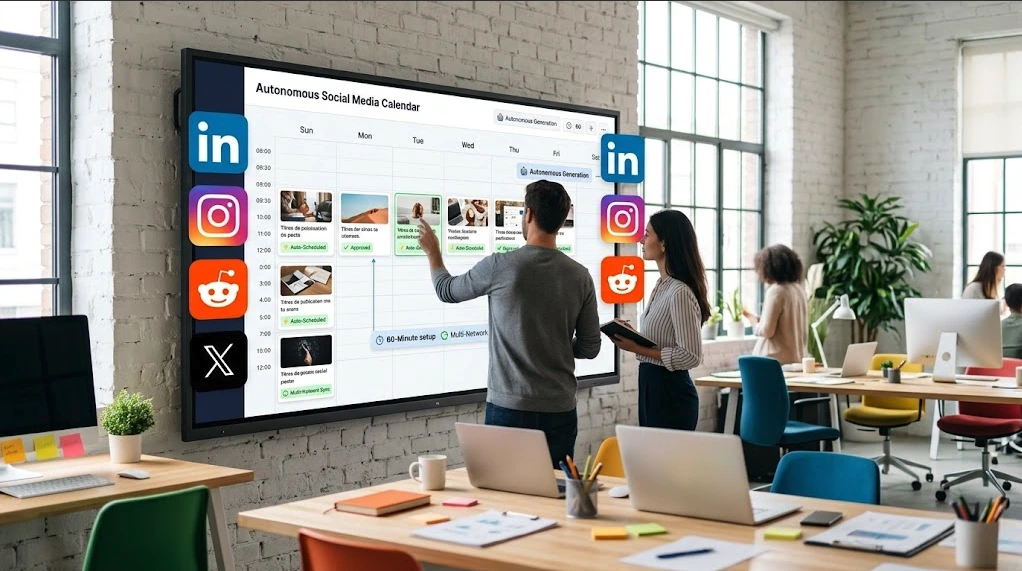
The Omnipresence Syndrome: A Marketing Masterclass from the Tobacco Industry
Take a moment to step back and objectively analyze the cigarette. It is a fundamentally disastrous product. It actively destroys the health of its users, it costs consumers a small fortune over a lifetime, it permeates clothing and environments with a stubborn, unpleasant odor, and it delivers absolutely no tangible, real-world benefit.
And yet, despite all of these objective flaws, it remains one of the best-selling consumer products in the history of humanity. How do we explain this irrational economic paradox?
The answer lies in a single, foundational marketing concept that supersedes almost all others: Omnipresence.
For decades, the tobacco industry relentlessly saturated the visual space of the public. Cigarettes were in Hollywood blockbuster movies, on cafe terraces, on massive street billboards, and in television commercials. The executives behind these campaigns understood an absolute rule of human psychology long before the digital age and social media algorithms came into existence: Constant, unavoidable visibility systematically beats product quality.
When a target audience sees a specific element repeatedly on a daily basis, that element eventually bypasses critical thinking and imprints directly onto their subconscious. It is no longer a thoughtful, calculated choice; it becomes a cultural norm. It becomes the default option. People didn't smoke because it was a great product; they smoked because it was everywhere.
The Fatal Flaw of the Modern B2B Founder
Now, transpose this psychological phenomenon to your B2B business in 2026. You might have engineered the most robust SaaS software on the market. You might offer the sharpest, most ROI-driven consulting services. You might have the most responsive customer success team in your industry.
But if you are invisible online, your target market will inevitably go to your competitor. That competitor might have a clunky, mediocre product, but they are posting high-value insights every single day on LinkedIn. They are actively engaging in threads on X (formerly Twitter). They are injecting their brand narrative into the daily news feeds of your shared prospects.
They are aggressively applying the cigarette strategy: they are saturating the digital space. You have an excellent product that nobody knows about because it exists in a vacuum. They have an average product that everyone buys because it is constantly top-of-mind.
The Myth of the "Shop Open Once a Week"
Renowned marketing expert Gary Vaynerchuk frequently uses a brilliant metaphor to illustrate this exact problem. Imagine, for a second, that you own a physical retail store located on a highly trafficked commercial street. You pay premium rent for this location. However, you decide to unlock the doors and open for business only once a week: on Tuesdays, strictly between 12:00 PM and 12:30 PM.
What is the inevitable outcome of this strategy?
- On Monday morning, eager potential customers walk by, look at your window, and see a sign that says: Closed.
- On Wednesday afternoon, a highly qualified prospect actively searching for your specific service pulls on the door handle: Locked.
- On Saturday, a massive weekend crowd strolls by your storefront without giving it a second glance.
Very quickly, the foot traffic will forget that your business even exists. They will naturally walk across the street and spend their money at the competitor's shop—a shop that is brightly lit, doors wide open, and welcoming customers 24/7.
This is exactly what you are doing to your business when you post on social media inconsistently. Writing a brilliant, 1000-word LinkedIn post on the 3rd of the month, and then disappearing into the shadows until the 18th, is the digital equivalent of closing your storefront.
In the algorithm-dominated ecosystem of 2026, user attention is the rarest and most fiercely contested resource on the planet. Social media algorithms (whether it's the LinkedIn feed or the X 'For You' timeline) reward one metric above all others: user retention via consistency. The winners in the B2B space are those who remain on their audience's radar every single day.
The Action Gap: Why Manual Content Creation is a Dead End
The conclusion is painfully clear: you must publish daily across multiple platforms to achieve omnipresence.
But let's be realistic. Creating native, highly relevant, and visually attractive content for LinkedIn, X, and Instagram requires a colossal amount of time and creative energy. You have to draft the copy, open a design tool like Canva or prompt an image generator like Midjourney, download the assets, ensure they match your brand guidelines, open a scheduling tool, format the text, and hit schedule.
If you are a founder or a lean marketing team trying to execute this manually, you will hit a wall. You will sacrifice the actual development of your company, and you will inevitably face creative burnout. The friction between switching tabs and managing different software creates what we call the Action Gap.
The solution to the Action Gap does not lie in working harder or hiring an army of junior copywriters. The solution lies in building a System. You must transition from an artisan logic (crafting each post by hand) to an industrial logic through Agentic AI Workflows and Content Repurposing.
Building an Omnipresence System: The Agentic Workflow
The core philosophy of an omnipresence system is simple: Create once, distribute everywhere.
Instead of staring at a blank page for every single social network, you use one raw idea as the primary fuel to feed your entire content ecosystem. This is where the integration of Claude Desktop and the High Story Model Context Protocol (MCP) transforms your computer into a weapon of mass content distribution.
An "Agentic Workflow" means the AI doesn't just chat with you; it executes actions on your behalf across external software. Here is the exact step-by-step framework to build your 30-day omnipresence engine in under an hour.
Step 1: The Brain Dump (Sourcing the Raw Material)
The biggest hurdle to daily posting is overthinking the initial draft. In this system, you don't need to write perfectly. You just need to extract the expertise from your head.
Record a raw 3-minute voice memo on your phone while commuting, or type a messy, unformatted bulleted list of thoughts into a document. Focus on a specific concept, a recent customer success story, a breakdown of a pricing strategy, or a contrarian opinion about the future of your industry.
Step 2: The Multi-Platform Expansion (Via Claude Desktop)
Open your Claude Desktop application. Because Claude 3.5 Sonnet has a massive context window and elite reasoning capabilities, it serves as your Chief Marketing Officer.
You feed Claude your raw Brain Dump, alongside your predefined Brand Voice Brief (a strict set of rules dictating your tone, forbidden corporate jargon, and formatting preferences).
You then prompt the AI to expand this single idea:
"Act as a world-class B2B copywriter. Take my raw notes and expand them into a multi-platform campaign. 1. Write a deep-dive, 400-word LinkedIn essay with a strong, scroll-stopping hook. 2. Extract the 5 key data points and format them into a highly engaging Twitter Thread. 3. Write 3 short, punchy reminder posts for later in the week."
Claude instantly structures, writes, and adapts the core idea for each specific format, ensuring your brand tone remains perfectly intact.
Step 3: The Visual Layer and Autonomous Execution (Via High Story MCP)
This is the critical phase where traditional AI chatbots fail, and where the Model Context Protocol (MCP) changes the game.
A text-only strategy is not enough for true omnipresence; you need branded visuals. Without leaving the Claude interface, you use natural language to command your external marketing stack.
"Now, use High Story to generate 3 minimalist infographics based on the data points from the Twitter Thread. Ensure the visuals strictly adhere to my company's blue and white brand color palette and typography. Once generated, take all the text and visuals, and schedule them to be published on my LinkedIn and X accounts via High Story over the next 7 days, posting at 9:00 AM daily."
Because the highstory-mcp server is running on your machine, Claude securely communicates with the High Story APIs. It renders the images directly in your chat for review, formats the posts, and pushes them directly into your live publishing queue.
Measuring the True ROI of AI Omnipresence
When most companies calculate the Return on Investment (ROI) of AI marketing tools, they look at a single, flawed metric: "How many hours of copywriting did we save?"
While saving 10 hours a week on drafting is valuable, it drastically underestimates the true financial impact of an "AI-First" workflow. The real ROI of the Claude + High Story MCP stack comes from four hidden levers:
- Eliminating the Tool-Switching Tax: By unifying ideation, visual generation, and scheduling within a single chat interface, you reclaim massive amounts of deep-work focus.
- Avoided Headcount: Scaling from 2 posts a week to 15 posts a week traditionally requires hiring a social media manager. An agentic system allows a solo founder to output the volume of a 3-person team with zero added payroll.
- The Consistency Compound: By automating the pipeline, you guarantee relentless consistency. The algorithms reward this with higher organic reach, which directly lowers your overall Customer Acquisition Cost (CAC).
Conclusion: Stop Waiting, Start Dominating
Do your potential clients think about your brand every single day? Or have they already forgotten you because your last post was a month ago?
You possess real expertise. You have a product that genuinely solves problems and transforms businesses. Do not allow mediocre competitors to steal your market share simply because they mastered the art of capturing attention.
Build your AI-driven content machine, close the Action Gap, and embrace omnipresence. In the hyper-competitive B2B landscape of 2026, the default option is always the one the market sees the most.
Frequently Asked Questions (FAQ)
What exactly is Content Repurposing?
Content Repurposing is a highly efficient digital marketing strategy that involves taking a single, core piece of content (such as a long-form blog post, a podcast episode, or a raw brain dump) and adapting it into multiple different formats tailored for various platforms (e.g., LinkedIn carousels, Twitter Threads, short-form videos). This maximizes the reach and lifespan of an idea without the need to constantly generate net-new concepts from scratch.
Why do algorithms prioritize consistency over "perfect" content quality?
In 2026, social media platforms operate on an attention economy model; their primary goal is user retention. A creator who posts daily signals to the algorithm that they are a reliable source of engagement, prompting the platform to boost their overall organic reach. Furthermore, consistent posting leverages the psychological "mere-exposure effect," where audiences develop a preference and trust for a brand simply because they are familiar with it through repeated daily exposure.
How does an Agentic AI Workflow differ from a standard AI Chatbot?
A standard AI chatbot (like a basic web interface) is reactive and siloed; it can generate text, but you still have to manually copy, paste, design, and schedule that text. An Agentic AI Workflow utilizes protocols like MCP to proactively interact with your external software stack. It can reason through a strategy, generate the text, trigger a separate engine to create branded visuals, and autonomously push the final assets into your live social media scheduling queue.
What is the Model Context Protocol (MCP) and why is it important for marketers?
The Model Context Protocol (MCP) is an open-source standard developed by Anthropic. It acts as a universal bridge, allowing local AI applications (like Claude Desktop) to securely connect to external databases, APIs, and tools. For marketers, MCP is revolutionary because it eliminates the "Action Gap." Instead of just giving advice, the AI can actually execute marketing tasks—like rendering images via High Story and scheduling campaigns—directly from the chat interface, requiring zero coding skills to set up.
A month of social media posts, ready to publish, in 2 minutes
HighStory reads your website and generates your Instagram, LinkedIn and Facebook posts with visuals, captions and a calendar. You approve, it publishes.