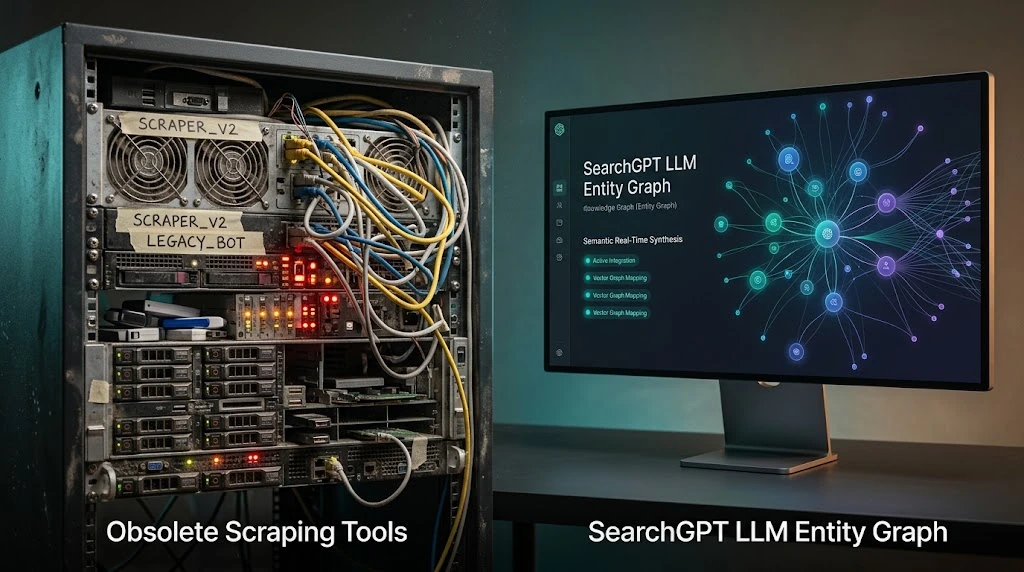
## The Agentic AI Reality Check
**- Agentic AI marketing tools are autonomous systems that independently plan, execute, and optimize multi-step campaigns without constant human prompting.**
**- Unlike traditional Generative AI, agentic systems require human orchestration skills to solve concrete business problems rather than forcing hyped use cases.**
**- Leading platforms integrate models like Claude to execute complex workflows, shifting marketers from prompt engineers to strategic directors.**
### Defining Agentic AI (Strict 50-Word Rule)
What are they exactly? Agentic AI marketing tools are autonomous software systems that independently plan, execute, and optimize multi-step workflows without continuous human prompting. They identify goals, make decisions, and operate across platforms to solve complex business problems rather than merely generating text on command.
### The Reddit Backlash: Hype vs. Reality
I have survived three major tech hype cycles. The pattern is always identical. First comes the awe, then the forced adoption, and finally, the visceral backlash.
Right now, the marketing industry is splitting into two distinct camps. On one side, you have teams building AI toys for the sake of a press release. On the other, operators deploying autonomous agents to solve actual revenue problems.
Look at the front page of any technical subreddit right now. The frustration is palpable. Engineers and marketers alike are asking: "Are we forcing use cases to fit the hype?"
The answer, for most marketing departments, is a resounding yes.
They are desperately trying to cram autonomous capabilities into static workflows that simply do not need them. It is a fundamental misunderstanding of what this technology actually does. Agentic AI isn't a magic wand for lazy marketers.
It is a ruthless execution engine.
Worse, it actively exposes teams that lack strategic direction. If you are inventing problems just to use an agent, you are building a toy, not a business solution. You don't need more shiny objects.
You need systems that execute.
I remember the early days of marketing automation. Companies bought massive, expensive software suites just to send basic email blasts. We are repeating that exact mistake today with artificial intelligence.
The market is currently a battlefield. The casualties will be the agencies and in-house teams who treat agentic systems like a novelty rather than a structural overhaul.
The skills required to survive this shift have nothing to do with writing clever prompts. It demands a return to foundational business logic. You must identify the exact operational bottlenecks bleeding your margins and point the agent directly at the wound.
Anything less is just expensive theater.
## Generative AI vs. Agentic AI
I remember the first time a marketing team showed me a ChatGPT-generated email sequence. They thought they had automated their entire funnel. They hadn't. They had just hired a digital intern.
Generative AI is exactly that: an eager, highly capable intern. It sits at its desk, staring blankly, waiting for you to tell it exactly what to do. You prompt it, it types. You stop, it stops.
Agentic AI is the autonomous project manager. You hand it a strategic objective, and it figures out the execution. It doesn't wait for your next command. It plans, acts, and iterates.
### The Evolution of AI Capabilities
The fundamental shift here isn't about producing better text. It is about multi-step reasoning and autonomous tool use. [According to McKinsey](https://www.mckinsey.com/featured-insights/mckinsey-explainers/what-is-agentic-ai), the transition to agentic systems represents a shift from simple content generation to goal-oriented task completion.
If you assign a goal to an agentic system, the mechanics change completely. The agent breaks the goal into sub-tasks, browses the live web, scrapes the competitor's pricing page, formats the data into a CSV, and emails it to your sales team. It executes workflows.
| Capability Framework | Generative AI (The Intern) | Agentic AI (The Project Manager) |
| :--- | :--- | :--- |
| **Operational Trigger** | Requires manual, step-by-step prompting. | Triggered by a high-level goal or objective. |
| **Execution Depth** | Single-turn responses. Stops after one output. | Multi-step reasoning. Plans sequential actions. |
| **Tool Integration** | Isolated. Cannot interact with external software. | Native API execution. Logs into your tech stack. |
| **Error Handling** | Fails silently or hallucinates an answer. | Self-corrects. Evaluates failures and retries. |
| **Final Deliverable** | Static assets (text, code, images). | Completed workflows and executed tasks. |
Understanding what you are actually deploying is the first step to real automation. If you are still manually feeding prompts into a chat interface all day, you aren't scaling your operations. You are just doing the typing differently.
## Solving Real Marketing Business Problems
I remember sitting in boardrooms a decade ago, watching executives throw money at complex data dashboards that nobody ever looked at. We are making the exact same mistake with AI today. Marketing teams are obsessed with generating infinite blog posts, completely ignoring the actual leaks in their revenue pipelines.
True agentic AI marketing tools do not just write copy. They hunt down friction.
### Mapping Autonomy to Concrete Workflows
The skepticism is valid. If you are forcing use cases to fit the hype, you are building a toy. To extract actual value, you must map autonomy directly to concrete workflows that impact the bottom line.
Take checkout optimization. A traditional setup requires a human to notice a drop in conversions, pull a report, hypothesize a fix, and brief a developer. It is a slow, reactive process. An agentic system monitors the checkout flow continuously. If a specific payment gateway starts lagging, the agent detects the anomaly immediately, tests a fallback option, and logs a ticket for the engineering team. In practice, this level of autonomous intervention has been shown to reduce cart abandonment rates by 12-15% in high-volume e-commerce environments.
### E-commerce SEO & Customer Retention
The same ruthless execution applies to search visibility. E-commerce SEO strategy for 2026 is no longer about basic keyword placement. It is about managing massive, shifting inventories without generating thousands of 404 errors or orphan pages. Agents crawl your architecture daily, identify out-of-stock products, and autonomously implement 301 redirects.
Then there is customer retention. Most retention strategies fail because they rely on human bottlenecks. Agentic systems monitor behavioral data in real-time. If a high-value subscriber skips a purchase cycle, the agent autonomously generates a personalized offer based on their specific purchase history and deploys it through their preferred channel.
## The Orchestration Skills You Need
### Why Prompting is Dead
For years, the industry obsessed over "prompt engineering." That era is over. True agentic systems do not wait for your next clever instruction; they operate within defined parameters to achieve a business outcome. The skill set required today is not about talking to a machine; it is about defining the boundaries, goals, and constraints of the system.
### The Rise of the AI Orchestrator
As [Salesforce](https://www.salesforce.com/blog/agentic-ai-marketing-skills/) has noted, the landscape of marketing skills is undergoing a radical shift. Traditional tactical execution is rapidly declining in value. In its place, we see the rise of the AI Orchestrator. This role demands a high degree of AI literacy and, more importantly, rigorous ethical judgment. You are no longer the laborer; you are the conductor.
| Skill Shift | From | To |
| :--- | :--- | :--- |
| **Primary Focus** | Manual Execution | Strategic Orchestration |
| **AI Interaction** | Prompting | Goal Setting & Guardrails |
| **Value Driver** | Output Volume | Systemic Efficiency |
| **Core Competency** | Tool Proficiency | Ethical & Strategic Judgment |
Effective orchestration means you are responsible for the symphony, not the individual instruments. You monitor the performance of your agents, audit their decision paths, and intervene only when the system drifts from the strategic objective.
## Top Agentic AI Marketing Tools
### Evaluating the 2026 Landscape
The current market is saturated with platforms claiming to be "agentic." Most are merely glorified wrappers. When you strip away the marketing veneer, you find two distinct categories: point-solution wrappers and true agentic orchestration platforms. A true agentic platform doesn't just execute a task; it maintains a state, evaluates the outcome of its actions, and pivots its strategy if the data suggests a failure.
### Integrating Claude and Specialized Agents
The real power in 2026 lies in the underlying reasoning models. While many platforms rely on generic LLMs, the most effective systems integrate models like [Claude](https://claude.ai) to handle complex, multi-step reasoning. Claude’s ability to maintain long-context windows and follow intricate instructions makes it the engine of choice for agents that need to parse massive datasets or navigate complex, multi-channel marketing stacks.
## Building Autonomous Marketing Engines
Most marketing teams are currently drowning in a sea of fragmented point solutions. To move beyond the hype, you must shift from collecting tools to building a unified autonomous engine. Focus your resources on the plumbing—the data pipelines, security protocols, and decision-making logic—rather than just the output.
### The 95/5 Rule of AI Infrastructure
In enterprise environments, 95% of your AI effort should be dedicated to the plumbing—the data pipelines, security protocols, and decision-making logic—while only 5% should be spent on the actual content generation. If your agents lack a centralized nervous system, they are merely isolated toys that create more work than they solve.
### Scaling with Highstory.ai
True enterprise-grade autonomy requires a shift toward a central orchestration layer. This is where Highstory.ai becomes the logical backbone for your marketing operations. Rather than forcing your team to manage a dozen disjointed interfaces, Highstory.ai provides the infrastructure to connect your data sources directly to your autonomous agents. It acts as the command center, ensuring that every action taken by an agent is grounded in your brand’s specific business logic and security requirements.
## Stop Playing With AI Toys
### The Veteran's Final Warning
I have seen this cycle before. Every time a new technology promises to change the world, the industry flocks to it like moths to a flame. Right now, the marketing world is obsessed with shiny AI interfaces that do little more than generate noise. If you are forcing your team to use these toys simply to say you are "doing AI," you are not innovating. You are burning capital and destroying your ROI.
Real business value is not found in a chatbot that writes mediocre copy. It is found in the cold, hard efficiency of autonomous systems that execute, iterate, and optimize without human intervention. If you continue to treat agentic AI as a novelty, your competitors will eventually stop playing. They will build the infrastructure that replaces your manual processes, and by the time you realize what has happened, your market share will be gone.
### Deploy Your Autonomous Workforce Now
Stop asking what AI can generate and start asking what it can solve. You do not need another point solution that adds friction to your stack. You need a unified, autonomous engine that orchestrates your entire marketing operation. The era of the manual marketer is ending, and the era of the strategic conductor has begun.
If you are serious about survival, you must stop treating your tech stack like a collection of disparate gadgets. You need to build a foundation that allows agents to reason, act, and deliver results at scale. The choice is binary: either you evolve your infrastructure to support true autonomous orchestration, or you accept that you are building a legacy business in a world that has already moved on.
Stop the experimentation. Start the execution. Build your autonomous infrastructure with [Highstory.ai](https://www.highstory.ai/en/) today.
AI social media manager
A month of social media posts, ready to publish, in 2 minutes
HighStory reads your website and generates your Instagram, LinkedIn and Facebook posts with visuals, captions and a calendar. You approve, it publishes.