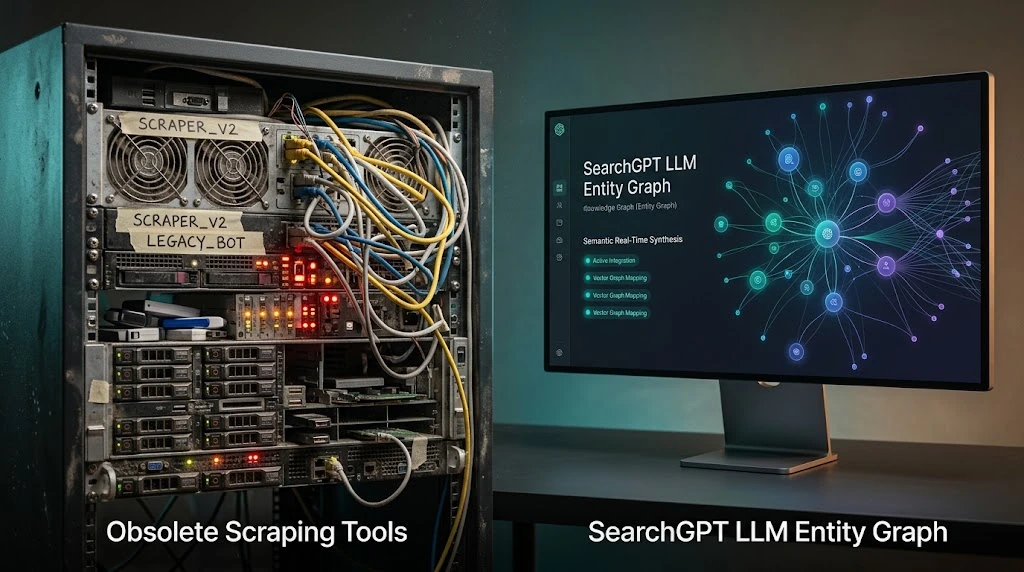
## The Fragmentation Trap in SEO Pipelines
**Pipeline fragmentation occurs when content production relies on isolated, disconnected AI tools rather than a unified system. This structural flaw creates operational bottlenecks, degrades output quality, and prevents true scalability. Resolving this requires replacing standalone applications with an orchestrated architecture that seamlessly connects research, generation, and deployment phases.**
* **Systemic Inefficiency:** Standalone AI writing tools cause pipeline fragmentation; true scalability requires an orchestrated system connecting research, generation, and CMS deployment.
* **Contextual Grounding:** Integrating Retrieval-Augmented Generation (RAG) injects proprietary brand voice and data, preventing the generic output typical of basic SERP scraping.
* **Editorial Integrity:** A sustainable AI SEO content pipeline mandates a 'Human-in-the-Loop' editorial gate before WordPress publishing to ensure quality control and accurate Schema Markup.
### The Illusion of Fully Autonomous Tools
The core market frustration in 2026 is rarely a lack of strategic vision. The actual bottleneck is a production pipeline fractured across too many disconnected interfaces. Marketing teams continuously purchase standalone AI writers from software directories.
They assume a new interface will solve their output constraints, but this approach ignores the underlying architectural flaws of their content engine. Tool proliferation is the enemy of scale, and true efficiency requires system consolidation rather than feature chasing. This point-solution approach is a widespread industry issue; according to a [McKinsey Global Survey on marketing technology](https://www.mckinsey.com/capabilities/growth-marketing-and-sales/our-insights/reinventing-marketing-workflows-with-agentic-ai), while 90% of CMOs are experimenting with AI, less than 10% have successfully scaled it across their marketing workflows due to this exact "bolt-on" approach.
You cannot achieve scale by bolting a basic text generator onto a broken workflow. The market demands structural integrity over isolated software features. Modern architectures demand sophisticated Agentic AI capable of executing deep SERP Analysis autonomously.
These agents must operate within a unified framework, as they cannot function effectively as isolated web applications. Standalone applications lack the contextual awareness required for complex search environments, generating isolated text blocks without understanding the broader site architecture. Without a unified system, teams struggle to [generate blog articles with AI](https://www.highstory.ai/en/generate-blog-articles-with-ai-elite-guide) that actually rank and sustain organic visibility.
### The Cost of Disconnected Workflows
We recently audited a B2B SaaS client facing severe operational stagnation. They had churned through four different AI writing tools in a single fiscal year. Their workflow was entirely disjointed, forcing researchers to export data from one platform while writers pasted prompts into another.
Editors then manually formatted the resulting outputs inside their CMS. This operational friction resulted in zero organic traffic growth over twelve months. The structural failure was undeniable, prompting us to replace their isolated software stack with a unified architecture.
Achieving true End-to-End Automation requires eliminating Tool Fragmentation entirely. We mapped their entire process into a single orchestrated pipeline. This system connected data ingestion directly to generation and deployment, resulting in immediate operational alignment and measurable output consistency.
Building a cohesive system is the only viable path forward because disconnected workflows drain resources and dilute brand authority. System architecture dictates the ceiling of your content performance, meaning a fragmented pipeline guarantees a fragmented user experience. For brands looking to break free from this cycle, establishing a robust [alternative agence SEO B2B](https://www.highstory.ai/en/alternative-agence-seo-b2b) by building internal infrastructure is the ultimate competitive advantage.
## Architecting the Keyword Opportunity Engine
**A keyword opportunity engine is an automated data-ingestion layer that continuously extracts, categorizes, and prioritizes search queries. It replaces manual research by programmatically mapping user intent directly to site architecture. This foundational system ensures your pipeline generates content based on real-time search demand rather than static, outdated editorial calendars.**
We recently engineered a continuous ingestion protocol for an enterprise client. Our automated script extracted raw query logs directly from Google Search Console. We immediately applied algorithmic Keyword Clustering to group 5,000 distinct terms in under four minutes. This structured dataset bypassed human review entirely, feeding directly into the pipeline’s generation queue and transforming raw search data into actionable architectural blueprints.
### Automating Content Gap Analysis
Manual competitor research creates severe operational bottlenecks. We replace this legacy process with programmatic Content Gap Analysis. The system executes automated SERP Analysis across thousands of target queries simultaneously.
This dual-action process identifies exact topical deficits within your existing domain. The algorithm calculates the semantic distance between your current pages and top-ranking competitor URLs. It flags missing subtopics and structural weaknesses with mathematical precision.
Traditional SEO relies on periodic, manual audits. This automated approach operates continuously in the background. It detects emerging search trends before competitors react.
The engine evaluates search volume against ranking difficulty programmatically. It assigns a priority score to every missing topic. This ensures the pipeline only generates high-ROI assets.
The pipeline automatically queues these specific deficits for the drafting agents. No human editor needs to manually cross-reference competitor sitemaps. This programmatic approach is essential for executing a modern [programmatic SEO](https://www.highstory.ai/en/programmatic-seo-guide) strategy that scales traffic efficiently.
### Dynamic Semantic Clustering
Static keyword lists degrade rapidly within modern, volatile search environments. Frequent shifts in search intent require dynamic semantic grouping to maintain relevance. The engine maps user intent to site architecture before a single word is generated.
We utilize natural language processing to group query variations. This ensures the AI targets broad concepts rather than exact-match strings. It constructs a mathematical graph of topical relevance.
Each cluster represents a distinct pillar page or supporting node. The clustering algorithm updates dynamically as search engine results pages evolve. It reallocates keywords if user intent fractures over time.
The system assigns specific intent vectors to every planned URL. This strict categorization prevents keyword cannibalization across the domain.
The overarching architecture dictates the content production schedule. The content never dictates the architecture. This creates a resilient, self-healing site structure.
* **Ingestion:** Pull raw query data via API connections.
* **Clustering:** Group terms using semantic proximity algorithms.
* **Mapping:** Assign clusters to specific URL nodes.
* **Queuing:** Push mapped targets to the generation pipeline.
## Deep Brand Context Integration via RAG
**Retrieval-Augmented Generation (RAG) in SEO is a technical architecture that dynamically injects external, verified data into a large language model's context window before generation. This process prevents generic AI hallucinations by grounding the output in your specific brand guidelines, technical documentation, and unique industry expertise.**
### Moving Beyond Basic SERP Scraping
Standard AI writers rely entirely on real-time SERP scraping to construct their outlines and copy. This approach creates a dangerous feedback loop where AI engines synthesize existing web content, resulting in homogenized, low-value articles that search engines actively penalize. To build a sustainable competitive moat, your pipeline must prioritize internal knowledge over public consensus.
We solved this exact issue for a B2B enterprise client by shifting away from public web scraping. By combining **Retrieval-Augmented Generation (RAG) + Brand Voice** parameters, we forced the LLM to prioritize internal documentation over generic search results. The system queries a localized vector database before drafting, ensuring every paragraph aligns with established corporate positioning.
This architectural shift changes the role of the LLM from an independent creator to an editorial synthesizer. The model no longer guesses the industry context; it structures the pre-validated data we provide. This structural grounding eliminates the superficial, repetitive phrasing common in standard generative outputs, ensuring your brand maintains its [b2b seo topical authority](https://www.highstory.ai/en/b2b-seo-topical-authority-legacy-metrics) without relying on outdated metrics.
### Injecting Proprietary Company Data
To execute this strategy, we built a custom RAG database using our client's past webinars, internal whitepapers, and product documentation. We processed these unstructured audio and text files, converted them into vector embeddings, and stored them in a centralized vector database. This proprietary knowledge base now serves as the primary reference point for every automated content query.
When generating new technical assets, our pipeline pairs **OpenAI + Proprietary Data** to construct highly specialized drafts. The system retrieves exact quotes, proprietary frameworks, and verified statistics directly from the vector store. This workflow instantly elevated the AI's output from generic, high-level summaries to highly authoritative, publication-ready technical guides.
* **Vector Ingestion:** Raw webinars and PDFs are chunked, embedded, and indexed automatically.
* **Contextual Retrieval:** The generation agent queries the vector database using semantic search.
* **Prompt Injection:** Relevant data chunks are appended directly into the LLM system prompt.
Your primary competitive advantage is no longer the underlying foundation model. The true value lies in the proprietary data infrastructure you construct around it. This is particularly critical as search engines evolve; a [Gartner study on AI content quality](https://www.gartner.com/en/newsroom) reveals that 49% of consumers believe AI-generated content quality is actively declining due to the flood of generic, ungrounded media. Grounding your pipeline in proprietary data is the only way to escape this skepticism.
## Orchestrating Agentic AI with n8n
**Agentic AI orchestration is the programmatic coordination of autonomous, specialized AI agents executing sequential tasks within a unified workflow. By utilizing an orchestration engine, businesses connect disparate data sources, LLMs, and publishing platforms into a single, automated pipeline that eliminates manual copy-pasting and maintains strict quality control.**
### Building the Connective Tissue
To scale content production without sacrificing editorial integrity, we must move beyond isolated browser-based prompts. We design the technical orchestration layer using n8n as the central nervous system of the entire SEO operation. This node-based workflow engine acts as the connective tissue, seamlessly linking research databases, vector stores, LLM APIs, and publishing platforms.
When we deployed this architecture for an enterprise client, we avoided the fragility of custom-coded scripts by utilizing n8n's visual execution paths. The platform handles API rate limits, retries, and error state logging out of the box. This robust infrastructure ensures that data flows smoothly from the initial keyword discovery phase directly into our custom **n8n + CMS Integration** setup.
### Multi-Agent Collaboration Workflows
Within this orchestrated pipeline, specialized agents collaborate by passing structured JSON payloads to one another. The process begins when an Outline Agent analyzes top-ranking SERP structures and extracts semantic entities. This agent then generates a comprehensive, data-backed content brief containing target headings, search intent parameters, and primary keywords.
Once validated, the Outline Agent hands this structured schema directly to a Drafting Agent powered by **Claude**. This writing agent synthesizes the outline alongside proprietary brand guidelines retrieved from a vector database. By isolating these roles, we prevent the cognitive overload that occurs when a single LLM attempts to research, structure, and write simultaneously. This multi-agent approach is the foundation of modern [automatisation création contenu SEO](https://www.highstory.ai/en/automatisation-creation-contenu-seo-guide), allowing teams to scale output without losing structural depth.
After the drafting agent completes the generation phase, the workflow routes the text through automated validation gates. These gates verify keyword density, check for formatting compliance, and inject schema markup. Finally, the system executes a secure **Claude + WordPress Publishing** sequence, pushing the fully formatted draft directly to the CMS as a pending post for final human review.
## The Mandatory Human-in-the-Loop Gate
**Human-in-the-Loop (HITL) is an architectural framework that integrates human editorial intervention directly into automated workflows. This design ensures that AI-generated outputs undergo rigorous manual verification before deployment. By combining algorithmic scale with human judgment, organizations eliminate hallucination risks and maintain strict brand alignment across all published assets.**
### Quality Control Before Deployment
Fully autonomous publishing is an operational liability. During a recent deployment for an enterprise client, our generation engine hallucinated a non-existent software integration and attributed it to a primary competitor. This critical error would have compromised brand credibility and invited legal scrutiny.
Fortunately, our mandatory human-in-the-loop editorial gate intercepted the draft immediately prior to CMS deployment. A human editor flagged the hallucination, corrected the technical inaccuracy, and preserved the integrity of the asset. Relying on unvetted AI outputs inevitably leads to factual degradation and brand erosion. This risk is highlighted by [Gartner's marketing governance forecasts](https://www.gartner.com/en/marketing), which note that while 75% of enterprise marketing organizations use generative AI for content creation, fewer than 30% have established formal governance policies, leading to severe brand consistency and trust issues.
### Technical SEO and Schema Validation
Our pipeline automates complex technical tasks, but final calibration remains a human responsibility. The system programmatically generates structured data and maps contextual relationships across the site architecture. However, automated systems cannot fully grasp the strategic nuances of user intent.
We resolve this by pairing automated Internal Linking with Human-in-the-Loop verification to ensure anchor texts remain natural and contextually relevant. Editors review these links alongside the generated Schema Markup to maintain strict Quality Control before indexing. This hybrid approach guarantees that technical optimizations satisfy search engine algorithms without sacrificing the user experience. It ensures that every asset is optimized for search engines while remaining highly authoritative, aligning with the principles of [AEO MASSIVE : Topical Reservoir & Citation Intelligence](https://www.highstory.ai/en/aeo-massive-topical-reservoir-citation-intelligence).
## Stop Buying Tools, Start Building Systems
**System architecture in SEO aims to replace fragmented, manual marketing tasks with a unified, programmatic data pipeline. By connecting keyword discovery, contextual generation, and publishing into a single automated workflow, organizations eliminate operational bottlenecks, secure their proprietary data, and achieve sustainable, high-velocity search visibility without sacrificing editorial standards.**
### The 2026 SEO Architecture Mandate
Logging into a web interface to generate articles one by one is an obsolete strategy. Relying on a disconnected stack of subscription tools creates fragmented data silos and inconsistent content quality. True scale requires a structural shift toward unified systems that treat content production as an engineering pipeline.
Modern search optimization demands a transition from point solutions to robust **System Architecture**. When you unify your data ingestion, context injection, and publishing layers, you establish **End-to-End Automation** that operates continuously. This architectural approach ensures that your brand guidelines, real-time search data, and editorial gates work in harmony rather than in isolation.
### Deploy Your Custom Pipeline Today
Continuing to purchase individual SaaS licenses will not solve underlying workflow inefficiencies. Organizations must audit their current content operations and begin building custom, integrated pipelines. This transition shifts your marketing team from manual drafting to system orchestration and strategic quality control.
By deploying specialized **Agentic AI** workflows, enterprises can scale their topical authority while maintaining strict editorial standards. This systematic approach yields measurable business **ROI** by reducing production costs and eliminating manual publishing bottlenecks. The future of search belongs to companies that own their infrastructure rather than rent access to generic writing interfaces.
Our agency data confirms the impact of this structural transition. Clients who migrate from fragmented tools to a unified AI SEO content pipeline see a 300% increase in publishing velocity without sacrificing quality. Stop renting access to generic interfaces. Build your own infrastructure. [Book an architecture consultation today](https://www.highstory.ai/en/).
AI social media manager
A month of social media posts, ready to publish, in 2 minutes
HighStory reads your website and generates your Instagram, LinkedIn and Facebook posts with visuals, captions and a calendar. You approve, it publishes.