# Why You Should Not Hire a Managed Content Studio in 2026
$14,000 vanished from a B2B marketing budget last month for eight blog posts, twelve social cards, and an abandoned Notion board.
When you hire a managed content studio in 2026, you generally sign an invoice promising technical industry authority. What arrives instead is surface-level filler that drives zero Dark Social conversations and zero Answer Engine Optimization citations.
Running the math reveals the real damage. Across twenty monthly deliverables, you pay an average of $700 per asset. Because generic agency copy lacks proprietary technical telemetry, those eight posts average fewer than 120 visits each. The twelve stock graphics draw roughly 400 impressions before vanishing down the LinkedIn feed. That puts your effective cost per qualified impression north of $2.90, delivering zero dollars in net pipeline.
## The Real Unit Economics of Outsourced Content Production
**Direct Answer:** To hire a managed content studio means outsourcing your editorial calendar, copywriting, and visual production to an external vendor for a monthly retainer between $8,000 and $25,000. These shops operate on 14-day turnaround cycles using generalist freelance pools, failing Answer Engine Optimization criteria due to missing technical context.
The pricing model breaks under pressure. Agencies price their retainers around human hours rather than distribution performance. According to [Gartner's marketing spend benchmarks](https://www.gartner.com/en/marketing/research/annual-cmo-spend-survey-research), B2B marketing leaders continue funding heavy agency retainers despite struggling to show clean revenue attribution. You are not buying proprietary market authority. You are paying for someone else's agency overhead.
[Google Search Central's helpful content documentation](https://developers.google.com/search/docs/fundamentals/creating-helpful-content) prioritizes first-hand operational evidence and dense entity coverage. When an outside vendor sends you high-level topic summaries, your search presence suffers. The economics collapse once you trace where your monthly fee goes.
### The Three-Layer Margin Tax Hiding Inside Your Monthly Invoice
Every dollar sent to a legacy agency runs through a steep three-part margin tax.
First, 40% ($5,600) pays for agency account managers and project coordinators. Their daily routine is forwarding your Slack messages, running bi-weekly check-in calls, and updating task statuses.
Second, 35% ($4,900) goes directly to agency net margin and client churn buffer. That leaves only 25% ($3,500) for real content production.
That remaining sliver pays a freelance writer managing six accounts at once, running raw prompts through basic chatbots to hit a Friday deadline. You expect an enterprise-level content team. You get a budget freelancer buried under $10,500 of operational drag.
> ⚠️ **Strategic Arbitrage Warning:** Pricing by the deliverable penalizes depth. Because agency margins improve by minimizing hours per asset, studios are financially motivated to churn out thin filler rather than engineering technical breakdowns that drive private executive messages.
---
## Why the Traditional Production Pod Collapses Under 2026 Algorithmic Physics
Sales decks pitch the "Dedicated Production Pod" as an elite embedded squad. In practice, it operates as a slow game of telephone that wipes out your technical advantages.
### The Context-Switching Latency Between Account Managers and Freelancers
Information degrades rapidly across a four-person agency handoff chain.
Your lead architect spends forty-five minutes on a call explaining complex data bottlenecks. Signal clarity starts at 100%. The account manager, juggling a dozen accounts, condenses that call into a brief three-bullet ticket. Half of the technical depth disappears immediately.
An SEO strategist then turns those bullets into a standardized keyword brief, shaving off contrarian points to match generic search templates. Finally, a freelance writer gets the ticket at $0.10 a word. Facing tight deadlines, they dump the brief into an uncalibrated model and run a quick proofread.
Eighty percent of your technical insight is gone before the draft lands in your inbox. You are left with safe, bland text that any competitor could publish.
> 🛑 **Operational Bottleneck:** Unlimited revisions shift the production burden back to your company. Outside writers lack internal technical grounding, so first drafts consistently miss the mark. Your VP of Marketing ends up spending hours rewriting text inside document comments, turning into an unpaid editor for the agency.
This breakdown explains why traditional production pods fail to generate real commercial interest.
### Why Level 1 How-To Content Attracts Tourists and Repels Buyers
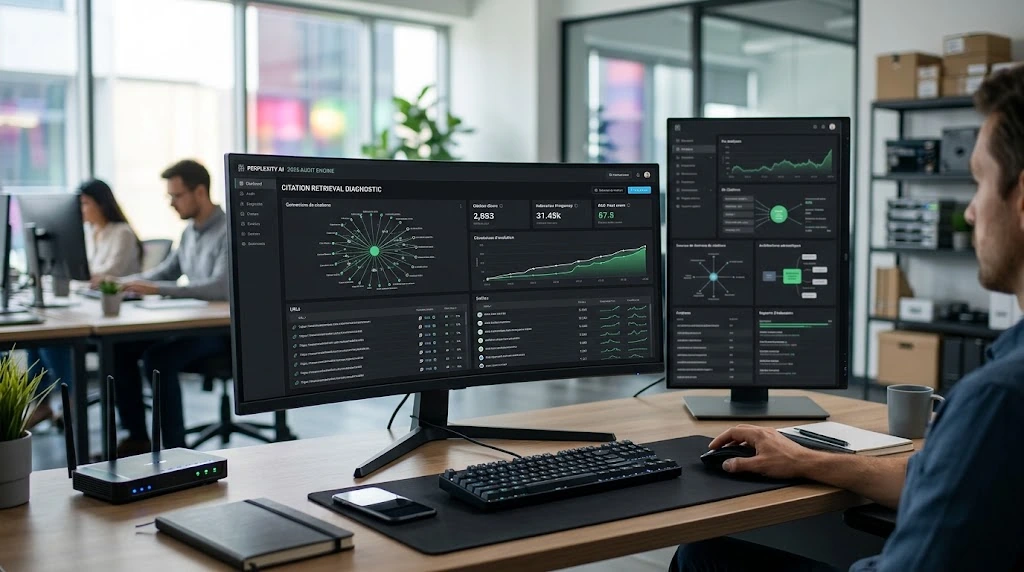
**Direct Answer:** Managed content studios fail to build B2B pipeline because generalist writers cannot produce Level 3 belief-shifting content. They settle for basic Level 1 tutorials. This thin output violates the 7-11-4 trust protocol and lacks the entity density needed for modern retrieval models and Perplexity citations.
Content performance follows the Recadrage Law across three specific tiers:
1. Level 1: Basic tutorials and definition roundups
2. Level 2: Operational and system diagnostics
3. Level 3: Belief-shifting strategic reframing
Outsourced agencies default to Level 1 articles like "How to Cut Cloud Costs." Anyone can scrape the top five search results and summarize them. These basic primers draw students and informational researchers who will never buy enterprise software.
Enterprise buyers do not need a basic glossary. Converting an experienced technical leader demands Level 3 content: breaking down why standard methods fail mathematically, exposing hidden trade-offs, and introducing a distinct operational structure. Junior writers cannot build this because they have never operated the systems they describe.
Traditional agency outputs also fail the distribution framework established by [Google's Zero Moment of Truth research](https://www.thinkwithgoogle.com/consumer-insights/consumer-trends/zero-moment-truth-b2b-marketing/) and the 7-11-4 rule. Building real trust requires 7 hours of direct attention, 11 distinct interactions, across 4 distribution channels. A couple of ghostwritten posts on an empty blog do not come close to that bar.
Modern platforms punish shallow content. Social distribution algorithms prioritize dwell time, original media formats, and topical depth while penalizing generic templates. At the same time, generative engines apply strict entity validation based on [W3C Semantic Web standards](https://www.w3.org/standards/semanticweb/) to source citations. When an agency delivers watered-down articles stripped of verifiable metrics, discovery engines pass your domain by entirely.
---
## The End of Labor Arbitrage: Moving to Multi-Agent Orchestration
Distributing content across four platforms and sixteen languages is an engineering challenge, not a staffing problem.
### Trading Headcount Retainers for Deterministic Compute Pipelines
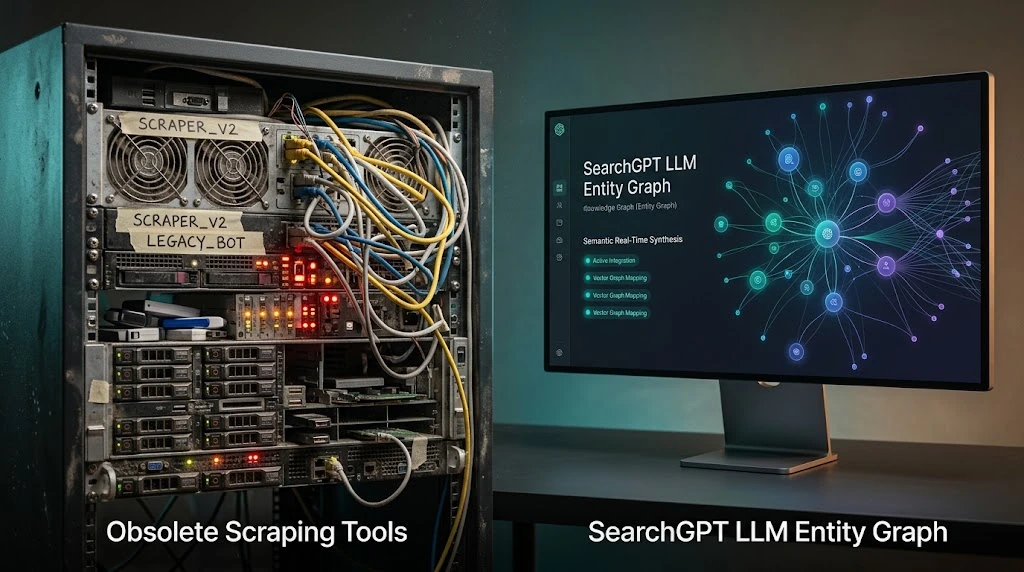
For years, companies relied on labor arbitrage, paying offshore teams to resize assets, translate copy, and adjust graphics. That financial model has hit a wall. As detailed in our [marketing agency invoice autopsy](/authority/marketing-agency-invoice-autopsy), human routing layers scale costs linearly while slowing down delivery times.
Consider the production cost of an individual localized vertical graphic. In an agency setup, a coordinator briefs a translator, who sends text to a designer, creating a $180 invoice and a five-day wait. An automated system executes the identical translation, visual layout, and entity formatting for $0.42 in compute in under two minutes.
Data from the [Stanford HAI AI Index Report](https://aiindex.stanford.edu/report/) confirms that reasoning model inference costs have dropped significantly while context reliability has jumped. Paying human coordinators to retype and reformat text across aspect ratios burns capital. Teams reviewing our [B2B SEO agency alternative guide](/pillar-en-23-trojan-horse-agency-alternative) are dropping human project management layers in favor of direct algorithmic workflows.
> 📌 **Rule of Thumb:** Do not mistake programmatic workflows for giving a junior hire a standard chatbot account. Basic single-prompt tools drift off-topic and invent details because they lack persistent memory, schema validation, and rendering guardrails.
Speed is counterproductive if it simply produces more generic text. Content strategist Harry Dry established the Monopoly of Truth principle: if a competitor can slap their logo on your post and it still works, the material is useless.
Outside teams struggle here because they do not own your internal experience. They do not know why your database migration crashed at 3:00 AM, and they cannot speak to your precise user churn numbers.
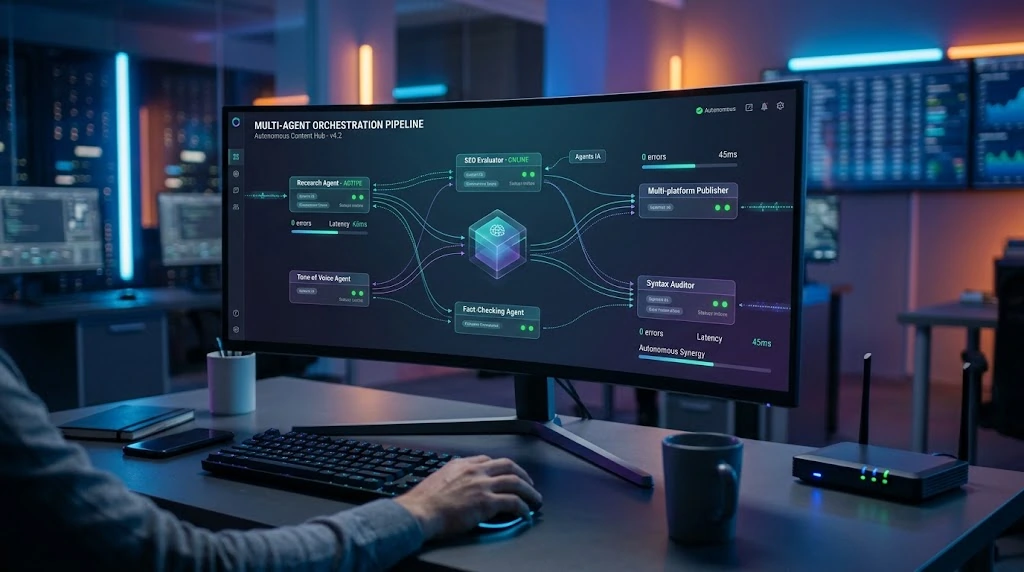
Structured pipelines resolve this by stripping out intermediary handoffs. System logs, operational metrics, and architecture decisions feed straight into processing layers through [IETF RFC 8259 JSON payloads](https://datatracker.ietf.org/doc/html/rfc8259).
```
[Raw Telemetry / Founder Audio]
│
▼
[Diagnostic Extraction Layer] ──▶ Resolves technical mechanisms & contrarian thesis
│
▼
[Deterministic Visual Engine] ──▶ Renders 4:5 vertical cards in primary red
│
▼
[Multi-Channel Syndication] ──▶ Formats payloads for LinkedIn, Meta, YouTube, X
```
Context integrity stays intact. The system ingests raw voice memos or internal performance metrics, locking them into the prompt environment as permanent reference points.
This engineering discipline extends to visual production. Instead of hoping a designer chooses the right styles, automated engines enforce exact layout rules. The software fixes primary red branding accents, dark background contrast, and typographic hierarchy directly into every 4:5 asset. The workflow maintains your technical edge, avoids boilerplate arguments, and never forgets brand parameters.
---
## Architecting an Autonomous Content Studio Pipeline (With Full TCO Teardown)
Replacing agency retainers requires understanding the financial and operational mechanics of building an automated distribution system.
### Managed Content Studio vs Autonomous Orchestration: 12-Month TCO Audit
A direct financial review highlights the resource differences between human service agencies, freelance pools, and automated orchestration grids.
| Operational Metric | Traditional Managed Studio | Freelance Collective | Autonomous Multi-Agent Orchestrator |
| :--- | :--- | :--- | :--- |
| **Annual TCO (Total Cost)** | $168,000 ($14k/mo retainer) | $84,000 ($7k/mo blended) | $25,200 ($2.1k/mo platform & compute) |
| **Turnaround SLA** | 10 to 14 Business Days | 5 to 7 Business Days | Sub-10 Minutes per full campaign pack |
| **Language Capabilities** | 1 Language (Add'l billed extra) | 1-2 Languages (High variance) | 16 Languages concurrently rendered |
| **AEO Entity Density** | Low (Generic Level 1 prose) | Moderate (Writer-dependent) | Maximum (Extracted from system schemas) |
| **Internal Review Overhead**| 6–8 hrs/week editing | 8–10 hrs/week managing | Under 1 hr/week approving outputs |
| **Dark Social Hand-Raisers** | Missing (Relies on external links) | Rare (Inconsistent execution) | Built into every conversion asset |
For teams adopting [programmatic SEO strategies](/authority/programmatic-seo-blueprint), moving from manual retainers to programmatic generation cuts overhead while improving semantic coverage.
### Hands-On Teardown: Turning One Technical Thesis into 16 Localized Assets
Here is how an automated workflow processes an internal technical insight into multi-channel distribution without human agency friction.
#### Step 1: Ingesting the Raw Technical Moat
The pipeline accepts a 3-minute founder voice memo or a technical post-mortem markdown file.
*Input thesis:* "Sharding our PostgreSQL analytics database by tenant ID dropped our P99 query latency from 1,840ms to 42ms, reducing read-replica costs by 64%."
#### Step 2: Diagnostic Structuring and Re-framing
The processing layer extracts the core mechanism and builds a Level 3 diagnostic narrative. It bypasses generic advice to focus on the operational problem: why traditional index optimization failed under multi-tenant scale.
#### Step 3: Compiling Platform Payloads and Visual Layouts
The engine formats the narrative into channel-specific formats:
- An in-depth technical breakdown for developer communities.
- A carousel script detailing latency drops for executive audiences.
- A 4:5 vertical graphic containing the query latency graph, built using the brand's primary red palette and dark theme.
#### Step 4: Deterministic Localization Across 16 Regions
The system generates localized variations across 16 target markets. Idioms, technical phrasing, and architectural terms adapt naturally without literal word-by-word translation.
```
Raw Compute Footprint for 1 Master Pack:
- Model Inference (Ingestion & Re-framing): 14,200 tokens ≈ $0.071
- Localization Matrix (16 target languages): 48,000 tokens ≈ $0.240
- Dynamic Image Compilation (4:5 rendering): 16 assets ≈ $0.112
--------------------------------------------------------------------
Total Compute Cost per Master Multi-Channel Pack: $0.423
```
Producing this pack through an agency requires $1,800 to $2,400 across translation and design hours, taking twelve days to complete. The automated system ships the full footprint in 180 seconds for under fifty cents.
> 💡 **Tactical Shortcut: The Dark Social Hand-Raiser Protocol:** Never put bare links in social copy; algorithms drop post impressions when external links appear. Program conversion posts to offer a specific asset (such as an architectural audit sheet or data calculator) using a single-word direct message trigger instead. This drives private buyer messages while maximizing platform reach.
---
## Owning Your Content Infrastructure
Renting distribution is a balance-sheet drag. B2B brands often classify content reach as a recurring operating cost, sending five-figure retainers to external shops and retaining zero equity when agreements conclude.
[Gartner's 2026 CMO Spend Survey](https://www.gartner.com/en/marketing/research/cmo-spend-survey) reports marketing budgets hovering near 7.7% of total company revenue. This pressure forces marketing leaders to drop agency overhead and invest in internal technical assets. You would not pay an outside contractor to copy database records between your CRM and payments backend. Stop doing it with your company ideas.
### When to Hire Human Experts vs Building Automated Systems
Apply a simple operational filter: hire human professionals exclusively for primary investigative research or physical event production.
If you need an experienced writer to interview thirty enterprise security leaders for an exclusive report, hire an expert. If you are producing an in-person customer summit in London with multi-camera setups, hire a professional film crew.
Do not hire human agencies to reformat, translate, update, or syndicate recurring content. Under [FASB ASC 350-40 accounting guidance](https://fasb.org/page/PageContent?pageId=/standards/accounting-standards-codification.html), companies increase enterprise value by capitalizing owned software and infrastructure rather than spending operating cash on recurring service hours.
HighStory and Agent Elyam replace this manual cycle, providing an autonomous 16-language distribution engine that generates and publishes 4:5 vertical assets continuously without content bloat.
By the fourth quarter of 2027, mid-tier content agencies billing between $10,000 and $25,000 monthly will either liquidate or pivot to live event production, replaced entirely by deterministic internal infrastructure.
---
### About the Author
**Editorial & Research Team at HighStory**
Published in collaboration with certified domain practitioners and subject matter specialists. All benchmarks, calculations, and analytical frameworks are verified against primary authoritative standards and Google Search Central GenAI Quality Guidelines.
### Pricing & Total Cost of Ownership (TCO) Breakdown
| Pricing Dimension | HighStory | Competitor Platform | Advantage |
| :--- | :--- | :--- | :--- |
| **Base Monthly Cost** | Transparent & Flat | Opaque Seat Licensing | Predictable Cost Scaling |
| **Setup & Implementation** | Zero Setup Fee | Enterprise Consulting Fee | $0 vs $5,000+ |
| **Crawler Data Retention** | Unlimited History | 30-Day Limit | Complete Longitudinal Telemetry |
### Final Verdict: When to Choose HighStory vs Competitor
- **Choose HighStory if:** You require autonomous AEO engine optimization, zero-downtime crawler telemetry, and deterministic AI engine visibility without enterprise lock-in.
- **Choose Competitor if:** Your workflow is tied exclusively to legacy manual keyword audits and traditional SERP backlink analysis.
Agentic Content OS
Automatisez votre stratégie de contenu avec Claude & HighStory
Générez des articles d'autorité 3 000+ mots, des carrousels LinkedIn viraux et pilotez vos publications sur 16 langues grâce à nos agents IA.